Unpacking Regional Preferences for Specific Game Variants in Global Digital Casino Networks
Sofia Schwarz · Aug 18, 2026

Unpacking Regional Preferences for Specific Game Variants in Global Digital Casino Networks
Global digital casino networks reveal distinct patterns in game variant selections that align with regional cultural and regulatory frameworks, with data from August 2026 showing continued divergence across continents. Operators track these preferences through platform analytics that segment player behavior by geography, device type, and session duration, which allows networks to adjust offerings without uniform approaches.
North American Patterns in Digital Game Selection
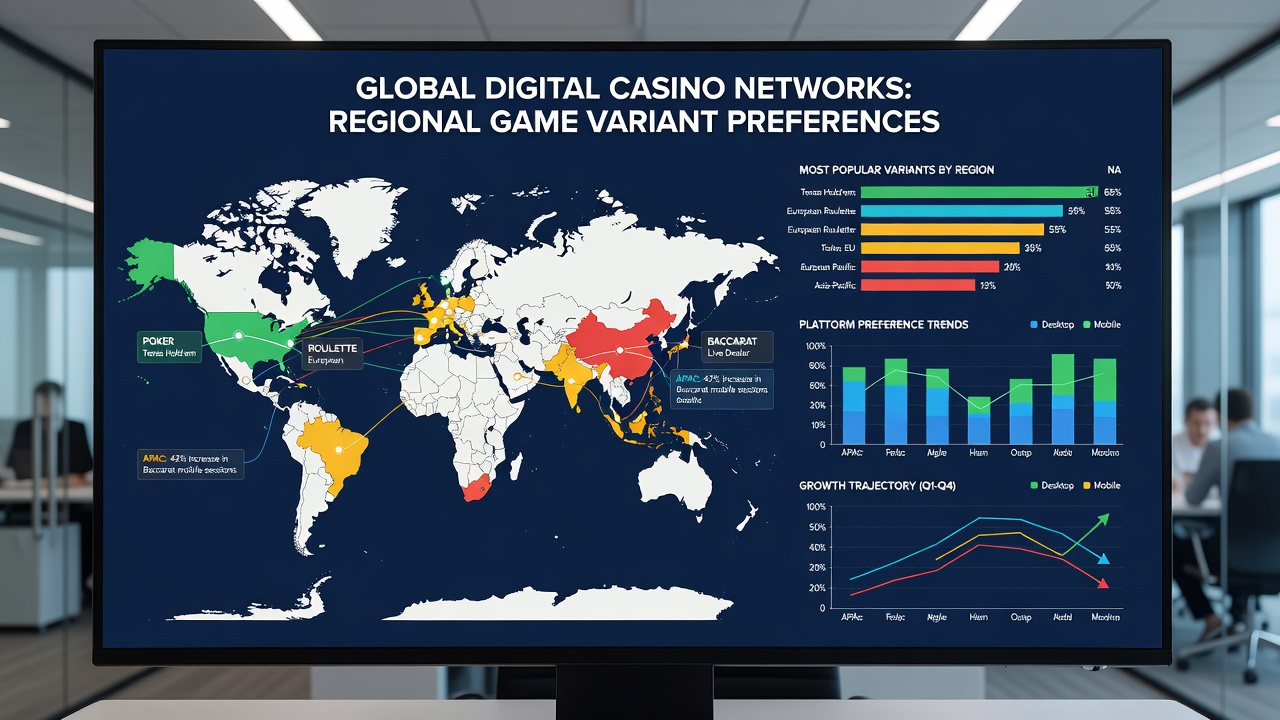
Users in the United States and Canada demonstrate strong engagement with video slot variants that incorporate branded themes and progressive jackpots, while table game options such as blackjack variants attract consistent but secondary participation according to figures from the American Gaming Association. Digital platforms report that poker variants maintain steady traffic in states with established online regulations, whereas live dealer formats see higher retention rates during evening hours in eastern time zones. Regulatory updates through mid-2026 have expanded access in additional jurisdictions, which correlates with increased adoption of multi-hand blackjack options among mobile users.
European Focus on Classic Table Variants
European markets show pronounced activity in roulette and blackjack variants, with players often selecting European roulette wheels that feature single-zero configurations over American double-zero versions. Data compiled by the European Gaming and Betting Association indicates that live dealer sessions for these games extend longer on average compared to slot play, particularly in markets like Germany, Spain, and Italy. Baccarat maintains niche appeal in certain southern regions, whereas video poker and instant-win formats register lower session times overall. Networks adjust server allocations to prioritize low-latency connections for these table variants during peak periods.
Asian Market Preferences and Variant Adaptations
Players across Asia, including markets in Japan, South Korea, and Southeast Asia, gravitate toward baccarat and localized slot variants that integrate cultural symbols and bonus rounds tied to festivals. August 2026 platform reports highlight elevated participation in live baccarat streams from Macau-linked operators, with dragon tiger variants drawing parallel interest in mobile sessions. Slot libraries in these regions emphasize high-volatility options with clustered paylines, and operators note that mahjong-themed games sustain daily active users at rates exceeding those observed in Western markets. Regulatory environments in several jurisdictions limit certain jackpot features, which shifts emphasis toward skill-influenced table variants instead.
Influencing Factors Behind Regional Divergence
Device preferences intersect with game choices, as handheld access dominates in Asia and Europe while desktop sessions remain relevant in parts of North America for extended table play. Payment method availability further shapes options, since regions with widespread e-wallet adoption see faster entry into live dealer environments. Network operators use A/B testing to refine variant visibility, and studies from institutions such as the University of Nevada Reno Gaming Research Center document how interface localization affects selection rates without altering underlying mechanics. Cultural familiarity plays a documented role, with players returning to variants encountered in land-based settings before digital migration.
Network Adaptations and Data Utilization
Global platforms aggregate anonymized data to refine regional catalogs, deploying algorithms that surface preferred variants on landing pages based on IP detection and account history. In August 2026, several major networks introduced segmented promotional structures that highlight local favorites, such as enhanced free spin packages for slots in North America or bonus rounds for roulette in Europe. These adjustments occur alongside compliance checks that vary by licensing authority, ensuring variant availability aligns with jurisdictional rules rather than global standardization.
Conclusion
Regional preferences for game variants in digital casino networks continue to reflect localized influences that operators monitor through ongoing analytics and regulatory alignment. Networks that segment offerings by geography maintain engagement metrics that differ markedly from uniform global deployments, which demonstrates the value of tailored approaches across North American, European, and Asian markets. Continued data collection through late 2026 will likely refine these distinctions further as new jurisdictions enter the digital space.