Shifting Focus: How Animated Table Interactions Guide Newcomers Through Blackjack Decision Trees on Smartphone Interfaces
Frankie Butler · Aug 13, 2026
Shifting Focus: How Animated Table Interactions Guide Newcomers Through Blackjack Decision Trees on Smartphone Interfaces
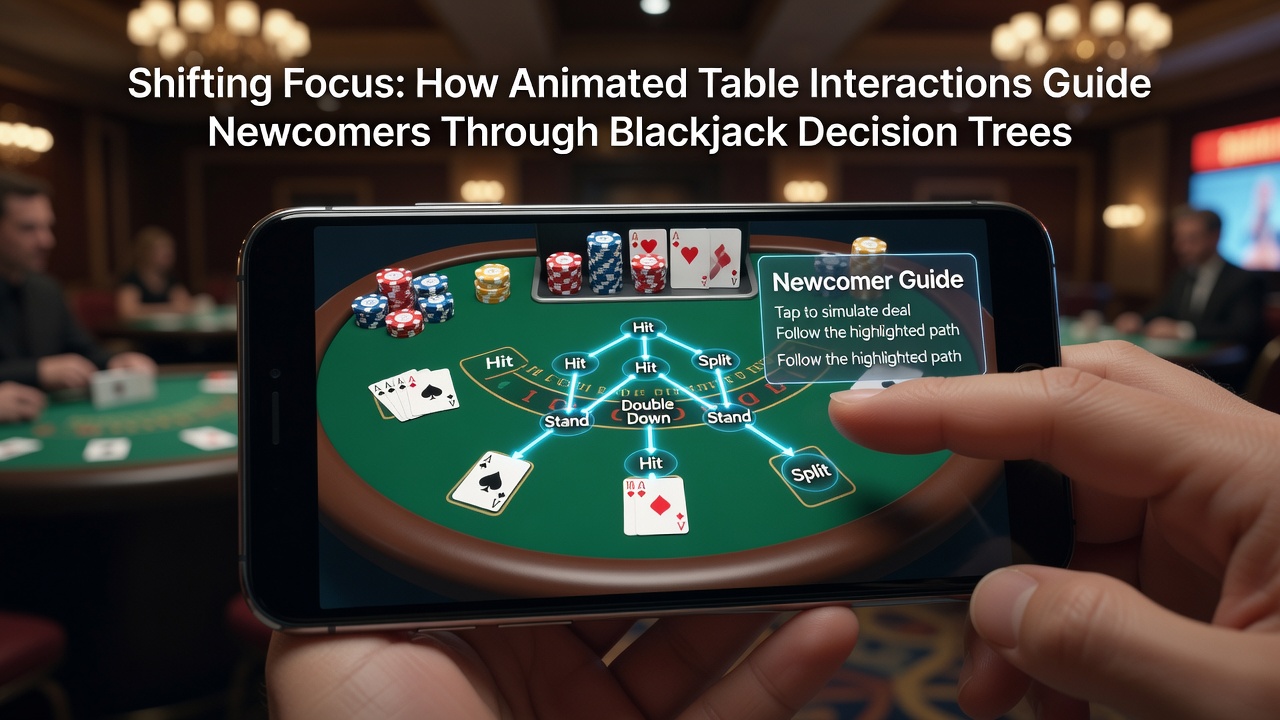
Smartphone applications for blackjack have integrated animated table elements that map directly onto established decision trees, and these visual cues appear as players face choices such as hit, stand, double down, or split during each hand. Data from industry monitoring groups show that mobile blackjack sessions accounted for a growing share of table game activity through the first half of 2026, with engagement metrics rising steadily into August of that year as operators refined interface designs.
Blackjack decision trees consist of predefined rules based on player totals, dealer upcards, and deck composition, and researchers at gaming technology conferences have documented how animations reduce the cognitive load of recalling those rules. Developers program sequences where cards slide into position, recommended actions pulse in color, and split options expand into separate hands, all while maintaining the underlying probability calculations that govern fair play.
Interface Design Elements in Mobile Blackjack
Table layouts on handheld devices display standard felt textures alongside dynamic overlays that activate when a player taps the screen, and these overlays follow branching paths identical to printed strategy charts yet adapt in real time to the specific cards dealt. Observers at recent trade events note that animation timing aligns with average decision windows of three to five seconds, preventing delays that could disrupt game flow while still directing attention to optimal moves derived from combinatorial analysis.
Sound cues accompany visual shifts in some applications, with soft chimes marking transitions between decision branches, although regulatory filings indicate that operators must keep such audio optional to comply with accessibility standards across multiple jurisdictions. Figures from the Canadian Gaming Association reveal that platforms incorporating layered animations reported higher session completion rates compared with static interfaces during controlled tests conducted in 2025.
Guiding Newcomers Through Branching Choices
New players encounter decision trees as a series of highlighted zones that expand or contract based on hand totals, and studies published in human-computer interaction journals describe how progressive disclosure techniques prevent overload by revealing only the immediate branch relevant to the current situation. When a player holds a pair of eights against a dealer ten, for example, the interface animates the split option as two distinct card positions while dimming less favorable alternatives, thereby reinforcing the mathematical edge without requiring external reference materials.
Testing conducted by software certification labs shows that these guided sequences maintain random number generator integrity because animations serve purely as presentation layers and never alter card distribution logic. In August 2026 several platforms updated their tutorials to include swipe gestures that let users replay previous hands, allowing repeated exposure to the same decision nodes under varying dealer scenarios.
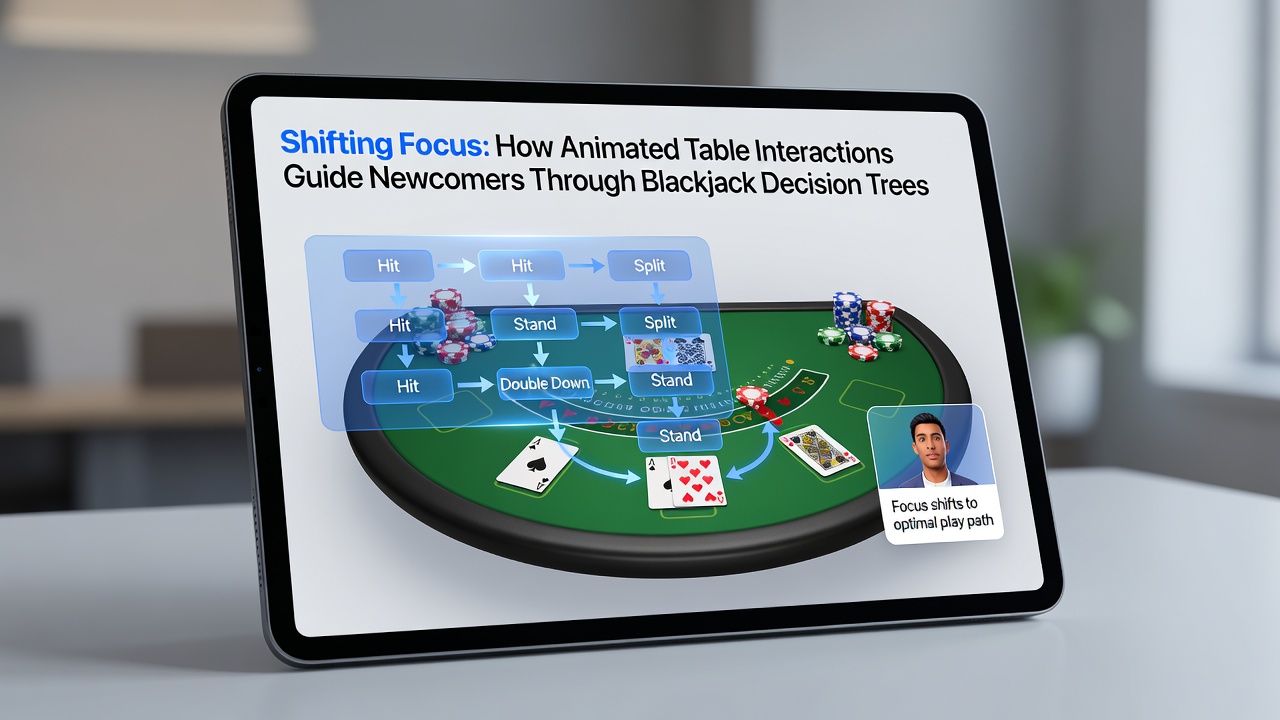
Developers have drawn from cognitive load theory when sequencing animation speed and opacity changes, and reports from the Australian Institute of Gaming Research indicate that graduated highlighting correlates with faster adoption of basic strategy among first-time users. The same reports note that retention metrics improved when animations included brief explanatory text that fades after two seconds, giving players time to internalize the rule rather than relying on perpetual prompts.
Technical Implementation and Regulatory Context
Animation frameworks rely on device-native graphics libraries to ensure smooth performance across operating systems, and compliance documentation submitted to state regulators in Nevada and New Jersey details how these visual layers undergo separate review to confirm they do not obscure payout information or betting controls. Developers coordinate frame rates with network latency measurements so that decision prompts remain synchronized even during variable connection speeds common on mobile networks.
Industry organizations such as the European Gaming and Betting Association have compiled usage statistics showing increased participation in skill-based table games when interfaces provide contextual guidance, and these statistics cover markets outside North America to reflect differing regulatory environments. Programmers continue to refine collision detection between animated elements and touch targets to minimize accidental selections during rapid play sequences.
Future Adjustments in Handheld Table Games
Updates scheduled for late 2026 include expanded support for multi-hand configurations where animated arrows trace recommended actions across parallel tables, and preliminary data from pilot programs suggest these additions maintain compliance with existing fairness certifications. Device sensors such as accelerometers have been incorporated in limited trials to allow tilt-based confirmation of decisions, further integrating physical interaction with the digital decision tree display.
Research institutions continue to track how repeated exposure to animated guidance influences long-term strategy retention once players transition to non-guided environments, and initial findings point to measurable carryover effects when animation frequency decreases gradually across sessions. Regulatory bodies in multiple regions require operators to log animation usage separately from wager data, ensuring transparency around interface features that influence player choices.
Conclusion
Animated table interactions on smartphone blackjack applications translate established decision trees into sequential visual steps that align with hand progression and regulatory standards. Data collected through mid-2026 demonstrate steady integration of these design approaches across major markets, supported by technical frameworks that preserve game integrity while assisting users with branching choices. Continued monitoring by certification labs and research groups will determine how further refinements affect both engagement patterns and compliance outcomes in the months ahead.