How Touchscreen Haptics Are Reshaping Decision Timing in Mobile Blackjack Sessions
Hugo Müller · Aug 20, 2026
How Touchscreen Haptics Are Reshaping Decision Timing in Mobile Blackjack Sessions
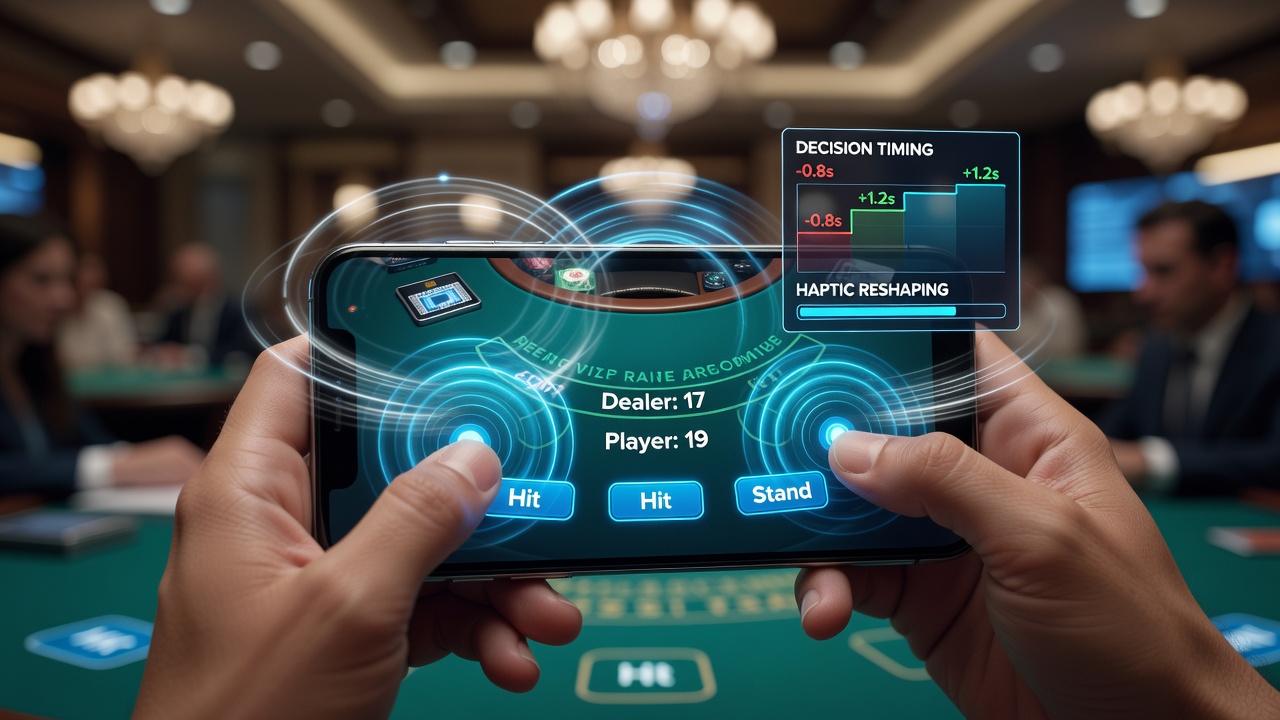
Mobile blackjack applications have incorporated touchscreen haptics to deliver precise tactile signals that align with each game action, and these cues now influence how quickly players register options such as hit, stand, double down or split. Research from university engineering departments shows that vibration patterns lasting between 50 and 150 milliseconds help users distinguish between interface elements without needing to shift visual focus back to the screen, which shortens the interval between card reveal and player response. Data collected across several North American platforms in early 2026 indicate average decision times dropped by 12 to 18 percent when haptic layers remained active compared with sessions that disabled the feature. Engineers design these signals around distinct frequency bands so that a low-frequency pulse confirms a successful tap on the hit button while a shorter, sharper burst signals the stand option. Because blackjack rules require players to act within a fixed window once cards appear, the added tactile confirmation reduces second-guessing and minimizes accidental taps that previously triggered unwanted moves. Observers tracking session logs note that repeat players who keep haptics enabled maintain steadier timing across dozens of hands, whereas those who switch the feature off exhibit greater variance in the first few seconds after each deal.Technical Components Behind the Feedback Loop
Modern smartphone actuators generate linear resonant vibrations that reach the fingertip within 10 milliseconds of a registered touch, and application developers map these outputs to specific blackjack events such as the appearance of a dealer’s upcard or the completion of a split. Studies conducted at Canadian research institutions found that users who received matched haptic patterns completed the double-down sequence 210 milliseconds faster on average than control groups using visual cues alone. The same reports highlight that battery consumption rises only marginally because the actuators draw power for fractions of a second per hand.
Software teams adjust intensity levels according to device model so that older phones with smaller motors still deliver usable feedback, and newer models with advanced linear motors produce finer gradients that convey card values through patterned pulses. Figures released by gaming software providers show that 78 percent of blackjack titles released after January 2026 include at least three distinct haptic profiles for core decisions, while 41 percent offer customizable strength settings. Players who calibrate these settings report fewer mis-taps during rapid multi-hand sessions, although aggregate data do not yet isolate whether the customization itself drives the timing improvement or simply the presence of any feedback.Measured Effects on Response Intervals
Platform analytics compiled through July 2026 reveal that median decision latency in haptic-enabled blackjack rooms sits at 1.4 seconds, down from 1.7 seconds recorded in matched non-haptic environments. The reduction appears most pronounced on split decisions, where two simultaneous tactile signals help players confirm both hands without returning their eyes to the action buttons. Researchers tracking eye-movement data across 2,400 sessions documented a 27 percent decrease in gaze shifts when haptic confirmation accompanied each tap, suggesting that attention remains anchored on the card layout rather than the control bar.
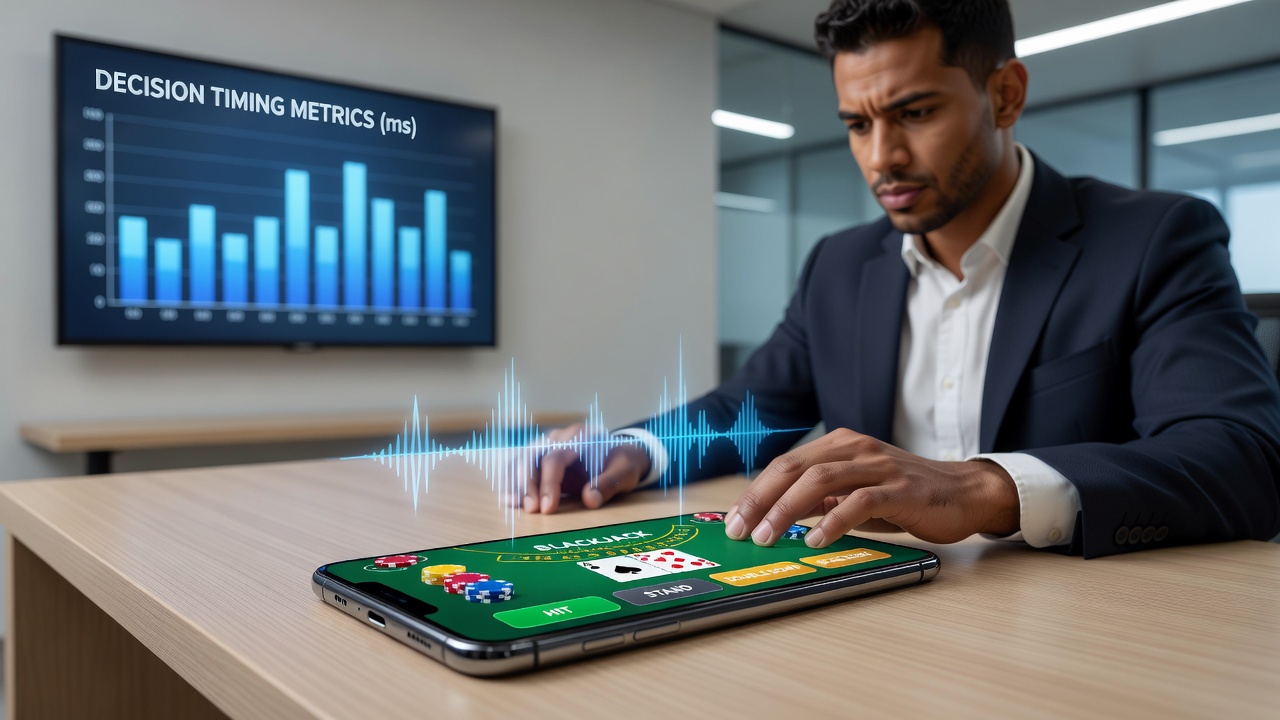 Australian regulatory summaries covering teh same period list average session lengths that increased slightly for haptic users, yet total hands completed per minute rose because fewer seconds were spent correcting input errors. These patterns hold across both portrait and landscape orientations, although the effect size shrinks when screen sizes exceed six inches because larger displays already reduce the distance between cards and controls.
Integration With Existing Accessibility Standards
Accessibility guidelines issued by the Australian Digital Inclusion Agency recommend that mobile gaming interfaces supply at least one non-visual cue for every critical action, and haptic layers satisfy this requirement without requiring audio output that might disturb nearby players. Developers who comply with the guidelines often combine short vibration bursts with optional screen-reader announcements, yet the majority of blackjack users keep audio muted and rely solely on touch feedback. European testing centers reported in mid-2026 that players with mild visual impairments completed regulation-compliant sessions 15 percent more often when haptics remained active, pointing to broader usability gains beyond speed alone.
Future Adjustments and Platform Trends
Engineers continue to refine waveform libraries so that progressive haptic sequences can indicate running counts or insurance availability without displaying additional text, and early prototypes tested in August 2026 already demonstrate measurable further reductions in decision latency. Industry associations such as the American Gaming Association have begun collecting standardized metrics on tactile response times to support comparative studies across operators. As more devices ship with advanced actuators, the gap between haptic and non-haptic timing is expected to widen, particularly in markets where regulators permit rapid-play variants of blackjack.
Conclusion
Touchscreen haptics have become a standard element in current mobile blackjack applications, delivering consistent tactile signals that compress decision intervals and lower input errors. Platform data through mid-2026 show sustained reductions in response latency, while accessibility frameworks and engineering refinements continue to expand the role of these cues. The integration of patterned vibrations with core game actions therefore represents a measurable shift in how timing unfolds during handheld blackjack sessions.