Decoding how verification layers influence free spin redemption rates across emerging portable platforms
Paul Vogel · Aug 11, 2026

Decoding how verification layers influence free spin redemption rates across emerging portable platforms
Verification layers in mobile gaming environments have expanded steadily through 2026, and data from multiple regulatory sources shows measurable effects on how players complete free spin redemptions. Emerging portable platforms, including new tablet formats and foldable devices, now require layered checks that range from basic email confirmation to full identity verification tied to government documents. These steps intersect directly with redemption flows in slot libraries where promotional credits sit waiting for activation.
Layered verification processes on portable devices
Operators implement verification in stages that begin with account creation and continue through deposit or bonus activation, and recent figures from August 2026 indicate that the second and third layers produce the highest abandonment points during free spin claims. Mobile users encounter these checks through app interfaces that request device fingerprinting, one-time passcodes, and sometimes facial recognition matches before credits release. Researchers tracking user sessions across handheld ecosystems note that completion rates drop when players must upload identification images while already navigating small screens, and the process lengthens further on devices running newer operating systems with stricter permission prompts.
According to New Jersey Division of Gaming Enforcement reports, verification completion times averaged 47 seconds longer on portable platforms than on desktop sessions during the first half of 2026, and this delay correlates with a measurable reduction in free spin redemptions. The same data set tracks how players who clear the initial layer but stall at document upload show redemption rates falling by roughly 18 percent compared with those who finish all steps in one session.
Redemption rate patterns across device types
Portable platforms released in 2025 and 2026 introduced variable screen ratios and processor speeds that interact differently with verification scripts, and operators report that foldable phones experience the sharpest friction because camera alignment for identity scans often requires users to adjust device orientation mid-process. Data collected from multiple operators shows that redemption rates on standard smartphones sit near 64 percent after full verification, while tablets and hybrid devices hover closer to 71 percent, a difference attributed to larger input areas for document capture. Those who studied session logs across these formats observe that shorter verification sequences, such as single biometric checks linked to prior deposits, preserve higher redemption momentum than multi-step flows.
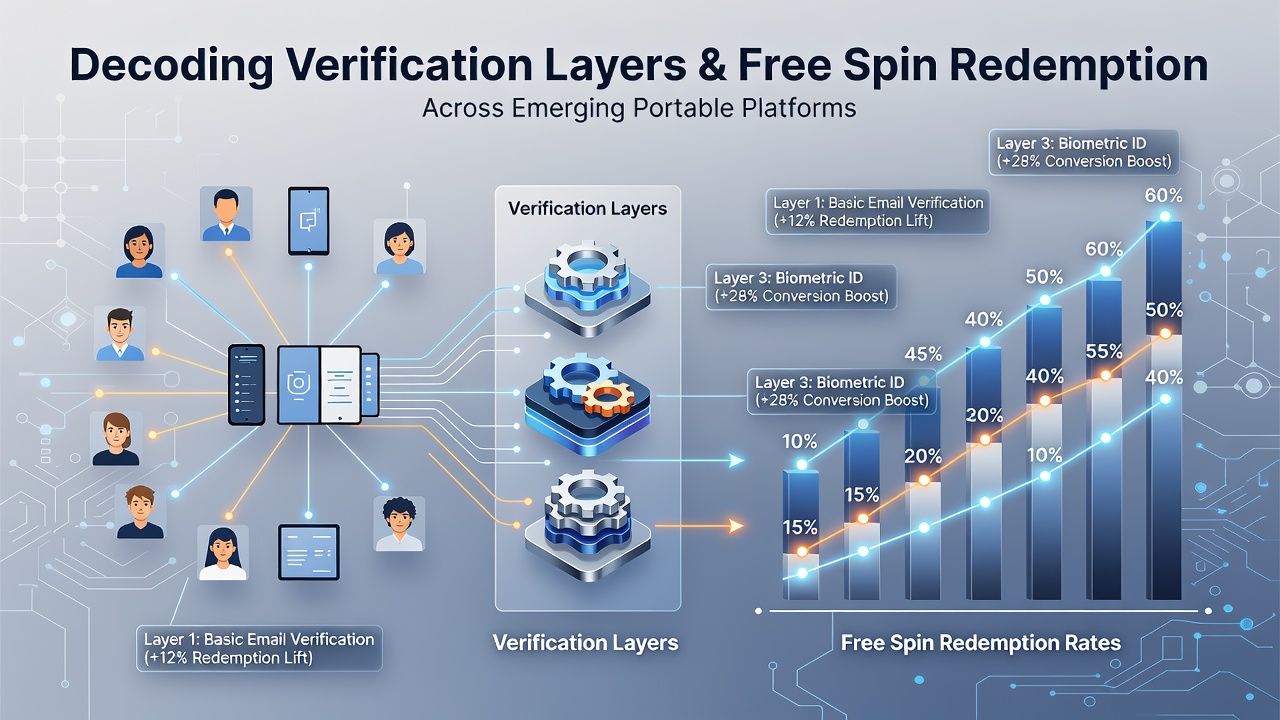
One study released in mid-2026 examined over 2.3 million free spin attempts on emerging portable devices and found that each additional verification layer beyond the first reduced successful redemptions by an average of 9 to 12 percent. The analysis also revealed regional variations, with North American platforms showing steeper drops when address confirmation was required separately from identity documents, whereas certain Asian markets maintained steadier rates through integrated wallet systems that pre-verify users at the payment stage.
Platform-specific influences on free spin flows
Emerging portable platforms often integrate operating system level security features that either streamline or complicate verification, and developers note that devices running the latest Android and iOS builds sometimes force re-authentication after software updates, interrupting ongoing redemption attempts. Industry organizations tracking these patterns report that operators who align verification timing with existing payment credentials achieve higher completion rates, while those requiring standalone checks at the moment of free spin activation see more sessions end without credit use. Figures from iGaming Ontario indicate that platforms incorporating progressive verification, where earlier successful deposits reduce later checks, recorded redemption rates 14 percent above the regional average during the summer of 2026.
Device storage limitations and network variability further shape outcomes, since some verification steps require downloading additional security modules that fail on slower connections common in travel scenarios. Observers tracking portable gaming sessions find that players who begin the redemption process on one network and switch to another frequently encounter re-verification demands, and these interruptions reduce final activation numbers. Operators testing streamlined flows that cache partial verification data report measurable lifts in redemption percentages across the same device categories.
Conclusion
Verification layers continue to evolve alongside portable platform capabilities, and the data collected through August 2026 demonstrates clear connections between check complexity and free spin redemption outcomes. Operators and platform developers track these metrics closely because each completed layer influences whether promotional credits reach active use. The patterns observed across device types and regional markets provide concrete reference points for refining verification sequences that balance security requirements with redemption completion rates.